
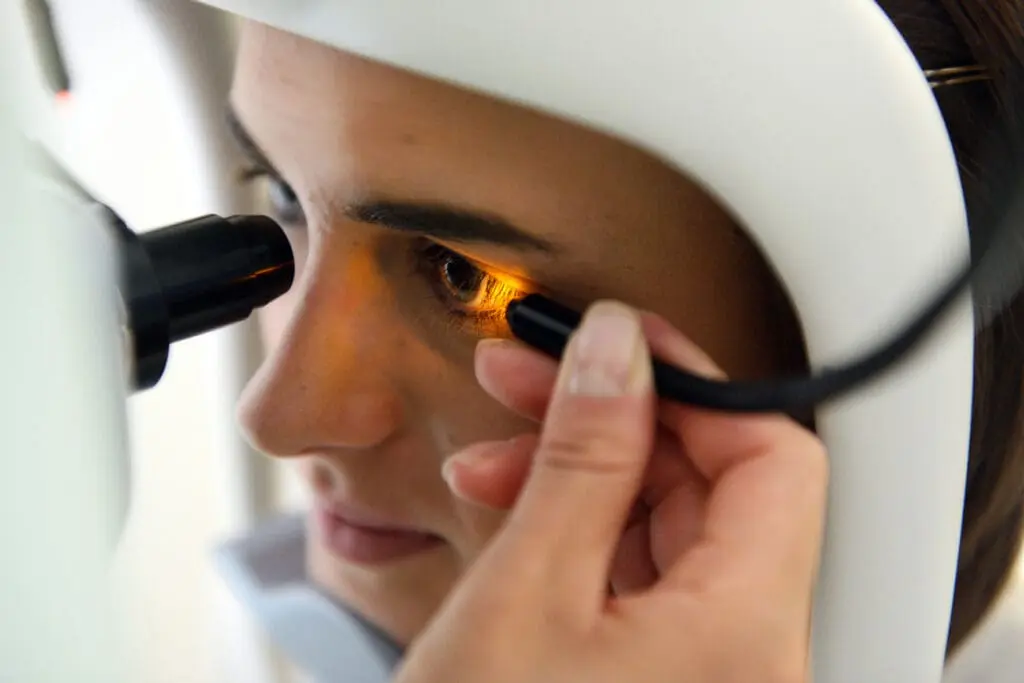
Keratoconus is a progressive eye condition where the cornea thins and bulges into a cone shape. This deflects light entering the eye, leading to distorted, blurred vision. As the condition progresses, it can significantly impact quality of life. Various treatments can help manage its effects. Understanding these treatments is the first step to addressing the visual challenges of keratoconus.
Specialty Contact Lenses
For many individuals, specialty contact lenses are the primary treatment for vision impairment caused by keratoconus. These lenses are designed to create a new, smooth refractive surface over the irregular cornea. Rigid gas-permeable (RGP) lenses are a common choice because they retain their shape, vaulting over the cone to provide clearer vision.
Scleral lenses are another option. These are larger-diameter lenses that rest on the white part of the eye (the sclera), vaulting over and completely covering the cornea. Hybrid lenses feature a rigid center with a soft outer skirt for added comfort.
Corneal Cross-Linking
Corneal cross-linking is a procedure designed to slow or halt the progression of keratoconus by strengthening the corneal tissue. During this minimally invasive treatment, the eye is treated with riboflavin (vitamin B2) eye drops, then exposed to a controlled amount of ultraviolet A light. This process creates new bonds, or cross-links, between the collagen fibers within the cornea. The strengthened cornea is better able to maintain its shape, helping prevent further bulging and vision loss associated with the condition’s progression.
Intacs Inserts
Intacs are small, clear, crescent-shaped inserts that an ophthalmologist surgically places in the middle layer of the cornea. This procedure is for individuals with mild to moderate keratoconus who cannot achieve functional vision with contact lenses or eyeglasses.
- How they work: The inserts flatten the steepness of the cornea, helping to restore its shape to a more normal curvature.
- Reversibility: A key advantage of Intacs is that the procedure is reversible. The rings can be removed or replaced if necessary.
Corneal Transplants
A corneal transplant is typically performed when other treatments are no longer effective, and vision loss has become severe. This surgical procedure involves replacing the diseased cornea with healthy donor tissue. There are two main types of corneal transplants: a full-thickness transplant (penetrating keratoplasty) and a partial-thickness transplant (deep anterior lamellar keratoplasty, or DALK), which preserves the innermost layers of the patient’s own cornea.
The goal of a transplant is to restore a more regular corneal shape. After healing, patients may need glasses or specialty contact lenses to achieve their best possible vision. Your surgeon will discuss which type of transplant is most appropriate for your specific condition.
Take Control of Your Keratoconus Treatment
Managing keratoconus requires a personalized approach, as treatment depends on the condition’s severity and progression. Options include non-invasive specialty contact lenses or surgical procedures like corneal cross-linking, Intacs inserts, or a corneal transplant in advanced cases. Each method improves vision by strengthening or reshaping the cornea. Work closely with a qualified eye care professional to determine the best treatment. Schedule an appointment with an ophthalmologist or optometrist to discuss your diagnosis and develop a treatment plan.