Crowns and bridges are two treatments that restore damaged or missing teeth while helping to maintain chewing ability. These restorations support everyday function by strengthening weakened teeth, filling gaps of missing teeth, and improving speech. Here is more information about the main types of bridges and crowns and the benefits each option can offer:
The Difference Between Crowns and Bridges
Dentists use crowns and bridges in different circumstances. Crowns support teeth that are weakened or fractured, and they can also be cosmetic. After a root canal, a dentist places a crown on top of the treated tooth. Dentists also use a crown when installing a dental implant that replaces one missing tooth.
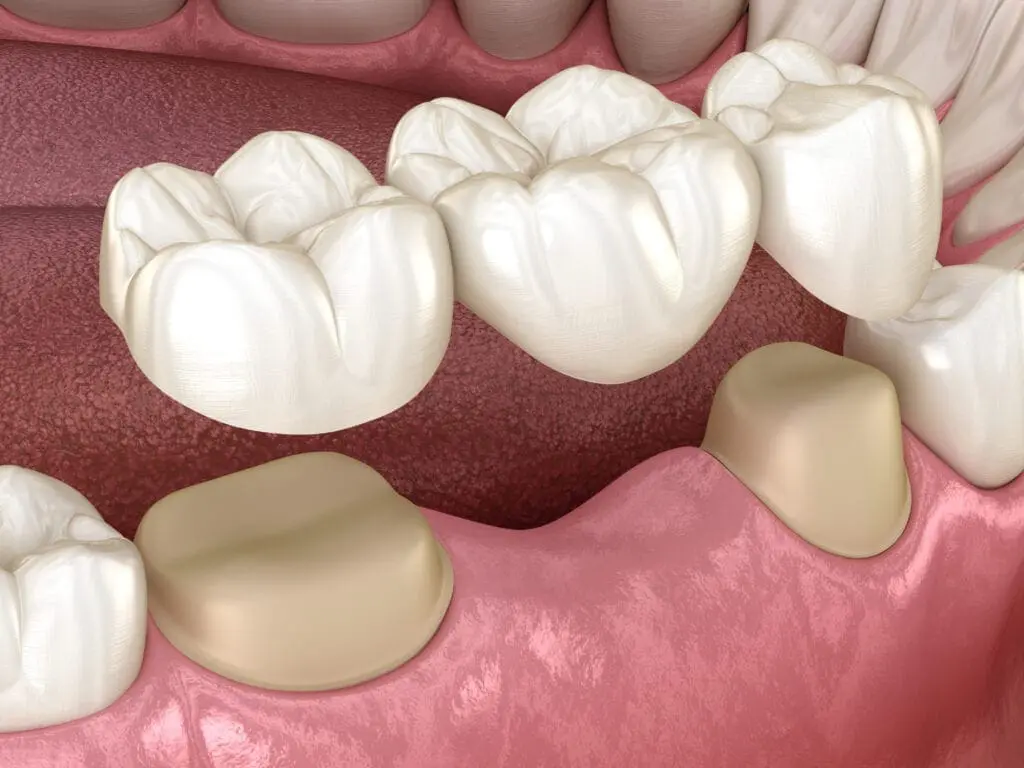
Bridges restore one or more missing teeth and are usually permanent, meaning a dentist must remove or replace them when needed. A bridge fills an open space in the row of teeth, helping to maintain proper chewing function and to prevent nearby teeth from shifting out of alignment.
Crown Types and Benefits
Crowns are custom-made caps that fully cover a damaged tooth and may restore its shape, strength, or appearance. Dentists may use different materials depending on the tooth’s location and how much chewing force the tooth must withstand.
Common types of crowns include:
- Metal Crown: offers strong and long-lasting support and is typically used for back teeth that handle more bite pressure.
- Porcelain or Ceramic Crown: made of all porcelain or all ceramic. This type can blend well with natural enamel.
- Porcelain-fused-to-metal Crown: combines a natural-looking exterior with the strength of a metal base.
- All-resin Crown: costs less, generally, and may wear down faster over time.
These materials offer different advantages, but all crowns aim to strengthen a weakened or visually flawed tooth structure. A crown can also improve the natural appearance of a tooth by fully covering discoloration or irregular shaping. Once bonded in place, the crown helps protect the tooth from further damage and may enable more comfortable chewing.
Dental Bridge Types and Benefits
Bridges replace one or more missing teeth using artificial teeth held in place by nearby natural teeth or dental implants. A bridge helps restore normal chewing and may support clearer speech by filling gaps where teeth are missing.
Some types of dental bridges include:
- Traditional Bridge: supported by crowns placed on the natural teeth on either side of the gap.
- Cantilever Bridge: anchored to only one adjacent tooth when support is available on just one side.
- Maryland Bridge: bonded to the backs of nearby teeth by a metal or porcelain frame.
- Implant-supported Bridge: attached to dental implants instead of natural teeth.
Bridges help prevent nearby teeth from shifting into the space left by missing teeth. They also support bite alignment by distributing chewing forces more evenly across the dental arch and may help restore or maintain facial shape.
Learn More About Crowns and Bridges
Bridges and crowns can restore function and appearance when teeth are damaged or missing. These treatments can strengthen weakened teeth, replace open spaces in the smile, and enable a more even bite so daily activities like chewing and speaking may feel more comfortable. If you want to learn more about crowns or bridges, consult a dentist to determine if you are a good candidate for dental restoration.