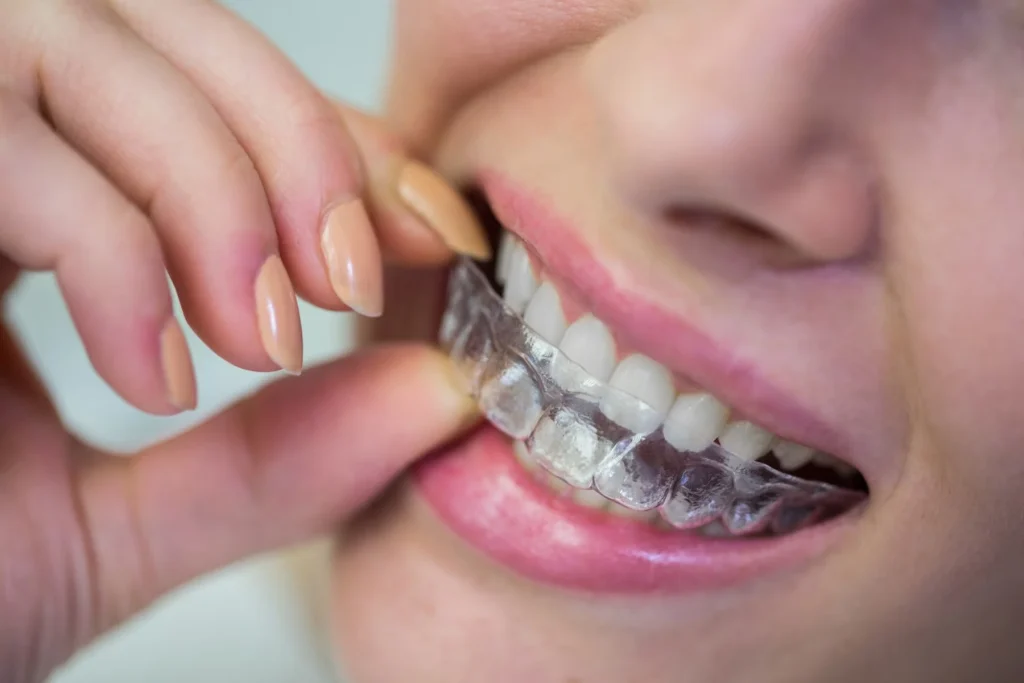

Invisalign treatment uses a sequence of clear aligners to guide teeth into new positions over time. These aligners are removable and made from smooth, transparent materials that offer a low-profile appearance. The process follows a planned series of steps that progress from evaluation to active tooth movement and final refinement. Since Invisalign relies on controlled force levels, each stage depends on consistent wear habits and scheduled monitoring.
Initial Evaluation
A full orthodontic evaluation begins with diagnostic records. These records show current tooth positions and bite relationships. The provider may take digital scans or impressions to create a detailed model of the mouth used to plan the treatment. Providers can then determine whether aligners are appropriate based on alignment goals and oral health conditions. The orthodontist estimates the number of aligners needed and the expected progression from start to finish.
The planning stage breaks down the process into incremental steps for the Invisalign aligners to accomplish. Each aligner is shaped to produce slight positional changes that build on the results of the previous tray. Manufacturing the trays involves processing the images or impressions of the mouth to fit the aligners to the wearer’s mouth. Once the series is finalized, it may take up to six weeks for the first sets of trays to arrive.
Treatment Expectations
Wearing the aligners for at least 22 hours a day causes predictable tooth movement throughout treatment because the trays fit closely against the teeth to maintain steady movement from one stage to the next. The clear aligners blend with the natural appearance of the teeth and allow daily activities to continue relatively comfortably after an adjustment period of about a week.
Providers review progress through scheduled check-ins that confirm whether teeth are tracking according to the projected plan. These appointments may include assessments of tray fit, evaluation of tooth movement, and confirmation that each aligner is producing the expected response. At each stage, the patient advances to the next tray in the sequence if the teeth match the predicted positions. Missed wear time can delay the next stage because each aligner depends on consistent force durations to stay effective.
Completion Stage
After the final aligner is used, providers evaluate whether the teeth have reached the projected end positions. Because teeth can shift over time, a provider may recommend and create retainers to help maintain the alignment achieved with the treatment.
Retainers may be removable or fixed in place on the teeth. Removable options can resemble clear aligners or they may have a wire that fits on the front of the teeth. A fixed retainer involves a small wire bonded to the back surfaces of select teeth to limit shifting. A removeable retainer can be removed during the day, and worn every night, while fixed retainers remain in place continuously and require regular oral hygiene to maintain cleanliness around the bonded areas. Replacement retainers may be needed if the material wears down, the fit changes, or the bonded wire loosens.
Learn More About Invisalign
For more information about Invisalign and teeth straightening, consult an orthodontist near you. The full Invisalign process typically takes 12-18 months, including the design and fabrication of the trays and the regularly scheduled appointments. Continued follow-up maintains treatment accuracy and helps preserve final alignment over time. Post-treatment retainers contribute to long-term stability once aligner use ends.