
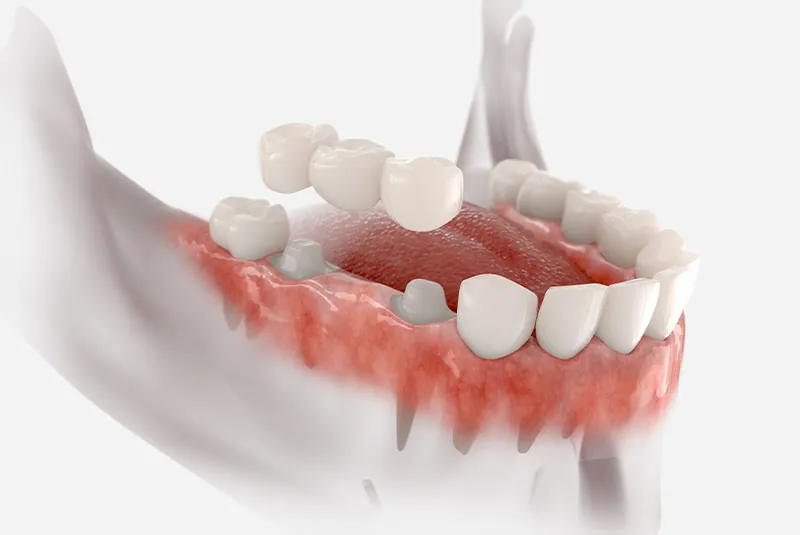
Crowns and bridges reinforce damaged teeth or replace teeth that are missing. These restorations maintain chewing function by covering weakened enamel or filling gaps that disrupt the bite. Bridges and crowns have multiple types and materials that solve different dental problems. Here is more information about dental crowns and dental bridges, their different types, and what they do:
Understanding Crowns and Bridges
A crown is a cap that protects a weakened or damaged tooth by covering the it with a durable material. This coverage provides stability when a tooth has had extensive decay, cracks, or significant wear that limit its natural strength. When placed on a tooth after a root canal, a crown reinforces the treated structure and restores normal function.
A bridge replaces one or more missing teeth by connecting an artificial tooth to healthy teeth or implants positioned on either side of the gap. Bridges support bite alignment by filling open spaces that may otherwise affect chewing. Crowns and bridges work together when the supporting teeth require added reinforcement before holding a bridge in place.
Types of Dental Crowns
Different crown materials can provide strength, durability, or different looks. The material selection depends on where the crown will be placed and how much force that area of the mouth typically absorbs. Some crown types include:
- Metal crowns: Provide high durability and withstand strong biting forces when replacing molars.
- Porcelain-fused-to-metal crowns: Combine strength and a tooth-colored exterior for balanced durability and appearance.
- Ceramic crowns: Offer natural color matching, making them useful for front teeth.
- Porcelain crowns: Provide tooth-like translucency when shade matching is a priority.
A dentist can discuss material types and help you select one that will fit your needs.
Types of Dental Bridges
Bridges differ in how they anchor to supporting teeth or implants, and each style fits specific clinical situations. The structure of the surrounding teeth influences which design offers the best support. Some bridge types include:
- Traditional bridges: Use crowns placed on two healthy teeth that anchor the artificial tooth.
- Cantilever bridges: Attach to a single supporting tooth when only one anchor is available.
- Maryland bridges: Use a metal or porcelain framework bonded to the backs of adjacent teeth for minimal alteration.
- Implant-supported bridges: Use on dental implants on either side of the gap for stability when multiple teeth are missing.
Each bridge type restores chewing function by spanning the space left by a missing tooth and creating a stable connection that distributes pressure evenly during biting.
Durability and Maintenance
Crowns and bridges can last for many years when the underlying teeth and gums remain healthy. Their longevity depends on many factors, such as the strength of the chosen material, placement location, and daily chewing forces. Regular dental check-ups help dentists monitor changes in the restoration and the supporting tooth structure, which helps maintain stability over time.
Daily brushing and flossing maintains the health of the teeth that support crowns and bridges and reduces plaque that may collect around the restoration edges. Good oral hygiene keeps the surrounding tissue stable, which helps preserve the restoration’s function. Avoiding excessive grinding or biting hard objects protects the material from unnecessary stress.
Learn More About Dental Restoration
To learn more about how dental crowns and dental bridges can help, consult your dental provider. These dental restorations can reinforce damaged teeth or replace those that are missing, restoring structure and bite function when properly maintained. Their different materials and design options allow them to match the needs of different areas in the mouth while supporting long-term oral stability.