
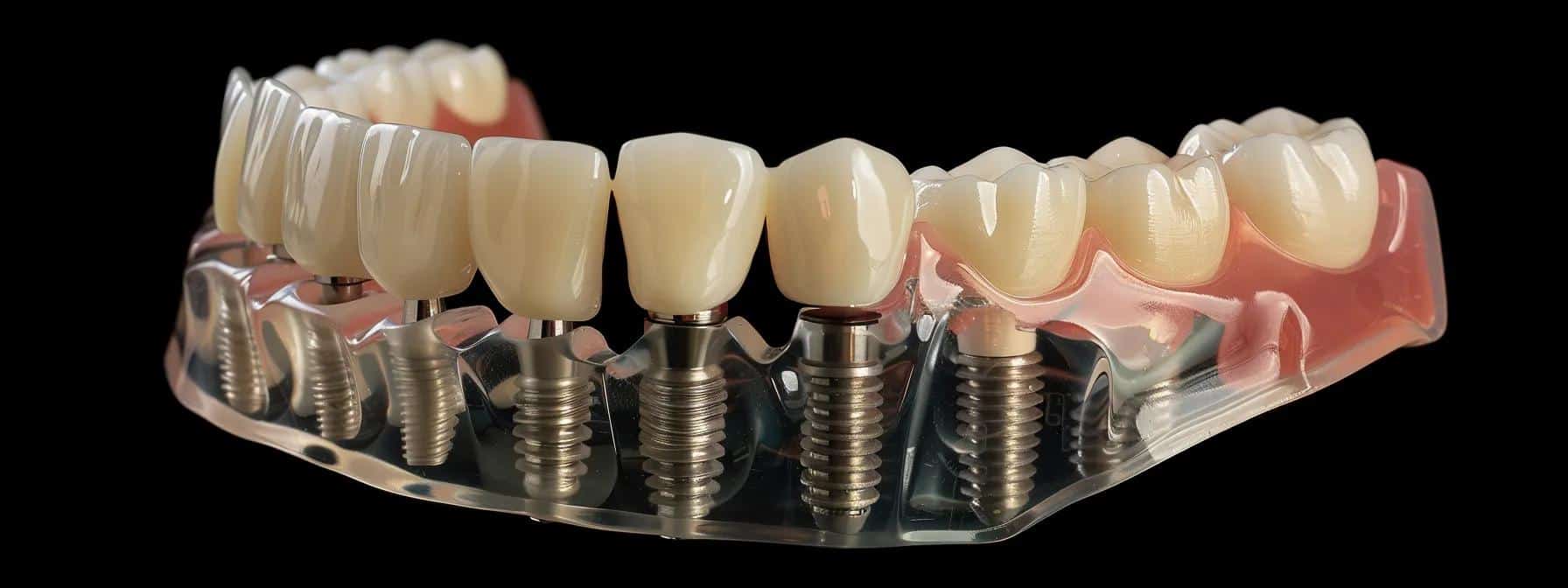
Dental implants offer a long-lasting way to replace missing teeth and restore everyday function. Each implant includes a durable metal post that acts as a replacement root, a connector that attaches above the gums, and a custom restoration shaped to match natural teeth. These parts work together to support chewing, preserve jawbone health, and rebuild the appearance of a complete smile.
How Do Implants Work?
Dental implants have three main parts: a threaded post placed in the jawbone, an abutment that attaches after healing, and a crown, bridge, or denture that completes the tooth replacement. The post is commonly made of titanium, though ceramic options also exist, and both materials are safe for your mouth.
After the bone bonds to the implant, the abutment is secured to the post. These parts serve as the connection point for the final restoration. The visible restoration is custom-made in shape, size, and color, allowing it to blend closely with surrounding teeth.
How Are Implants Placed?
Implant treatment happens in stages that begin with placing the post into the jawbone. The gum is opened, the bone is prepared, and the implant is set into position. Once they have placed the implant, the dentist closes the area so healing can begin.
During the next phase, the bone gradually fuses with the implant in a process called osseointegration. This stage builds long-term stability and may take several months. After the area heals, the provider attaches the abutment and takes impressions of the teeth to design the custom restoration. A final appointment secures the restoration to the abutment, completing the tooth replacement.
The full process varies depending on healing, general health, and the type of restoration planned. In some cases, treatment may span several months to a year from start to finish.
How Can Dental Implants Help?
Implants can result in better chewing ability, clearer speech, and a natural-looking smile once restored. Because they stand independently, implants may not require adjustments to neighboring teeth, making them a less invasive option compared to traditional bridges.
The stability of implants can allow them to function comfortably during everyday activities once fully healed. With routine brushing, flossing, and dental checkups, implants may last for many years and in many cases can remain in place for a lifetime.
Who May Be a Good Candidate?
Patients who are in good general health and have enough healthy gum tissue and jawbone volume may be candidates for dental implants. Adequate bone support is help to holding the implant securely during healing and long-term use.
Certain factors may require additional evaluation, including smoking or a history of gum disease. Chronic conditions such as diabetes or high blood pressure may also be factors. In some cases, a dentist may recommend additional procedures to prepare the area before placing an implant. A full assessment by a dental professional helps determine whether implants are suitable and what steps may be needed to support healing.
Explore Your Dental Implant Options
Contact a qualified dentist to learn more about your dental implant options. The combination of a secure post, a stable connector, and a custom restoration can create a dependable solution for long-term function. With consistent oral care and routine checkups, implants can provide lasting strength and comfort.