Dermatologists are physicians who diagnose and manage conditions affecting the skin, which includes skin cancer. With extensive training, they identify suspicious lesions, determine appropriate testing, and guide patients through treatment. Understanding their role in skin cancer care helps patients make informed choices about skin health and management.
What Is Skin Cancer and What Causes It?
Skin cancer arises when abnormal cells in the outermost layer of skin begin to multiply without control. The main factor behind these changes is exposure to ultraviolet (UV) radiation, such as sunlight. Repeated sunburns and long periods of sun exposure increase the risk of DNA damage in skin cells, which can lead to cancer over time. Dermatologists also recognize genetic factors that increase risk. People with fair skin, light-colored eyes, and a family history of skin cancer are more prone to developing the disease. These factors guide dermatologists in risk assessment during skin exams.
What Are the Types?
There are three main types of skin cancer classified by the cells involved. Basal cell carcinoma is the most common type of skin cancer. It develops in the basal cells found at the bottom of the epidermis, typically on areas exposed to the sun. These lesions often appear as pearly bumps and usually grow slowly. Though they rarely spread, untreated basal cell carcinomas can damage surrounding tissues.
Squamous cell carcinoma begins in the squamous cells, making up the outer skin layer. It commonly appears as rough, scaly patches on sun-exposed skin. This form of cancer can grow deeper and may spread if not managed.
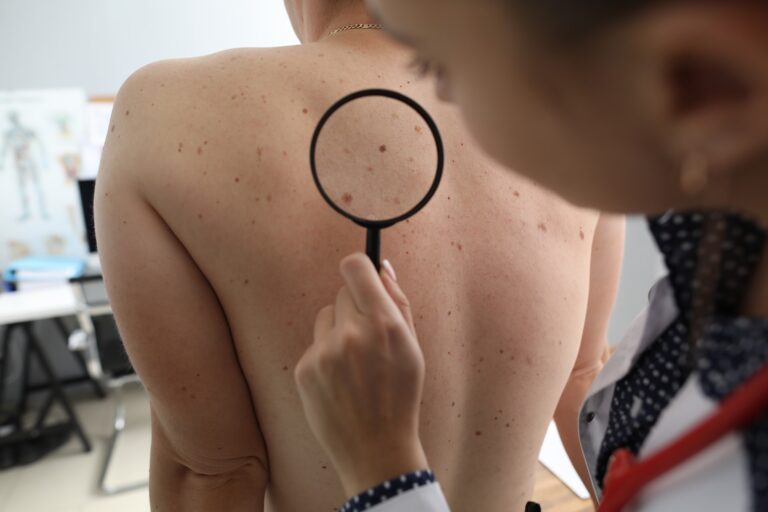
Melanoma arises from melanocytes, which are the cells responsible for pigment in the skin. Melanoma often looks like an irregular, multicolored, or expanding mole. Though not as common as the other types, melanoma may grow quickly and has a greater potential to spread to other parts of the body. Dermatologists rely on detailed skin examinations to detect these cancers early. Monitoring visible changes supports accurate diagnosis. Early identification of abnormal lesions is central to achieving the best possible outcome.
How Is It Treated?
Treatment depends on the type, depth, and spread of the cancer, as well as its location on the body. Dermatologists employ a range of techniques to address these factors. Surgical excision is widely used, which is when the dermatologist removes both the cancerous lesion and a margin of normal skin.
Mohs surgery is a precise surgical technique, typically conducted in stages. Specialists remove thin layers of affected skin, examine them under a microscope, and continue until no cancer cells remain. This method preserves as much healthy tissue as possible and is often recommended for facial cancers or those with irregular borders.
Topical medications, such as creams or gels, may be prescribed to treat certain surface lesions without surgery. This approach can be effective for early-stage cancers. Throughout treatment, dermatologists provide education on wound care and recovery. They also offer follow-up care to assess treatment results and detect new or recurring lesions.
Meet With a Dermatologist
Receiving care from a dermatologist offers a path to early detection and careful monitoring of skin health. Establishing regular appointments with a dermatologist enables ongoing risk assessment and guidance tailored to individual needs. Their expertise remains central to personal skin health management, helping to navigate the full range of diagnostic and therapeutic options for skin cancer.