
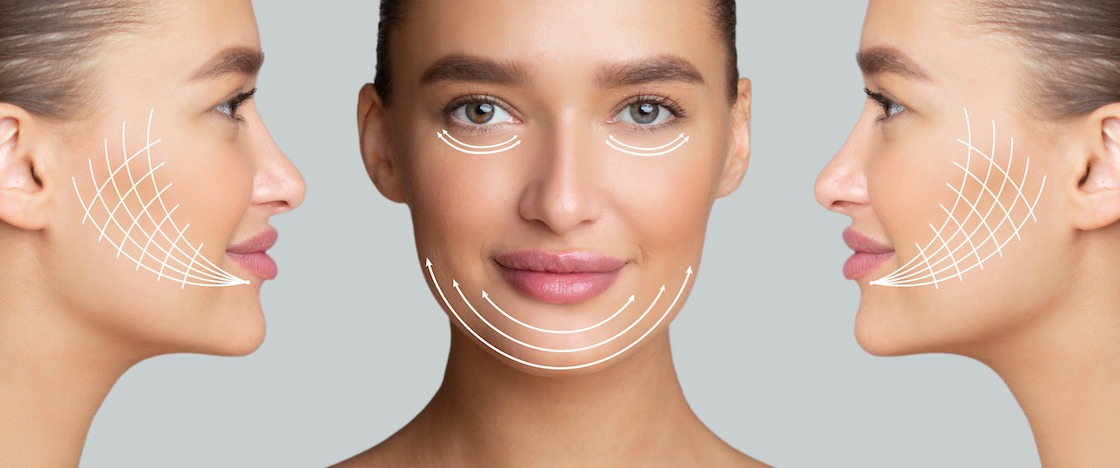
Cosmetic surgery encompasses a range of procedures designed to change, restore, or refine aspects of physical appearance. Surgical options may focus on many areas of the body, but facial procedures are common. Individuals often seek cosmetic surgery to adjust facial structure, definition, or symmetry, drawing on advancements that enable more precise and personalized results. Here is some information about the role of plastic surgery in enhancing facial contours:
Custom Facial Implants
Custom facial implants alter the fundamental structure of the face in a targeted way. Surgeons use advanced medical imaging to design implants that match the angles and proportions of the patient’s facial bones. Cosmetic surgery implants are commonly made from medical-grade silicone or porous polyethylene, and they are chosen for their compatibility with human tissue and long-term durability.
Applications often focus on the chin, jawline, or cheekbones, where more projection or definition may be desired. Someone with naturally narrow cheeks might use cheek implants to achieve a fuller mid-face appearance. During the surgical process, small incisions are made in the mouth or under the chin, and this reduces visible scarring. Once in position, the implant provides stable and long-lasting contour modification, tailored to the goals discussed in advance between the patient and surgeon.
Facelifts and Facetites
Facelifts and facetites aim to reshape the soft tissues of the face and address changes linked to aging or genetics. A facelift involves a multi-step approach; the surgeon:
- Repositions deeper facial tissues
- Removes or repositions fat
- Trims away loose skin to restore smoother lines
Depending on the technique, incisions can be placed near the hairline or behind the ears to minimize visibility. Some people choose a facelift to address visible sagging or deep creases that develop over time. A facetite offers a minimally invasive alternative using radiofrequency-assisted lipolysis. Radiofrequency energy is delivered beneath the skin with a small probe, and this contracts tissue and stimulates collagen production. Patients who wish to avoid extensive surgery might explore facetite to improve firmness or smooth contours in targeted areas.
Cheek Reductions
Fullness in the cheek area affects the overall shape of the face and the prominence of features such as the jawline. Cheek reduction is a surgical procedure that addresses excessive roundness or fullness in the mid-face. The buccal fat pads, which naturally vary in size between individuals, are removed or sculpted via a discreet incision inside the mouth. This technique avoids external scars and aims to reveal more pronounced cheekbones or a sharper facial silhouette. Surgeons determine how much fat to remove during the procedure, and changes are tailored to align with other facial features.
Chin Augmentations
A well-defined chin is often viewed as a key factor in balanced facial proportions. Chin augmentation procedures modify the chin’s size, shape, or projection to better complement the nose, lips, and jawline. The procedure may involve genioplasty, where the chin bone is repositioned and stabilized using small plates and screws. An alternative is a pre-shaped chin implant, and this is inserted through a hidden incision under the chin or inside the mouth. These procedures can help balance a receding or under-projected chin or create a stronger facial frame.
Schedule Cosmetic Surgery Today
Each facial contouring procedure offers a distinct way to reshape or refine facial features, which may involve implants, tissue repositioning, or fat reduction. A cosmetic surgeon provides personalized insights tailored to your needs and facial structure, and a consultation offers an opportunity to ask questions and discuss your cosmetic surgery goals. Contact a plastic surgery clinic today to schedule an appointment.