Invisalign® clear aligners offer an alternative approach to orthodontic teeth straightening for people who want a more discreet and flexible option. Both Invisalign and traditional braces move teeth through controlled force, yet they greatly differ in appearance and daily care. Invisalign uses a series of clear trays that guide teeth gradually, while braces rely on fixed brackets and wires. Here is more information about Invisalign and traditional braces, how they work, and the differences between them:
Invisalign® and Braces
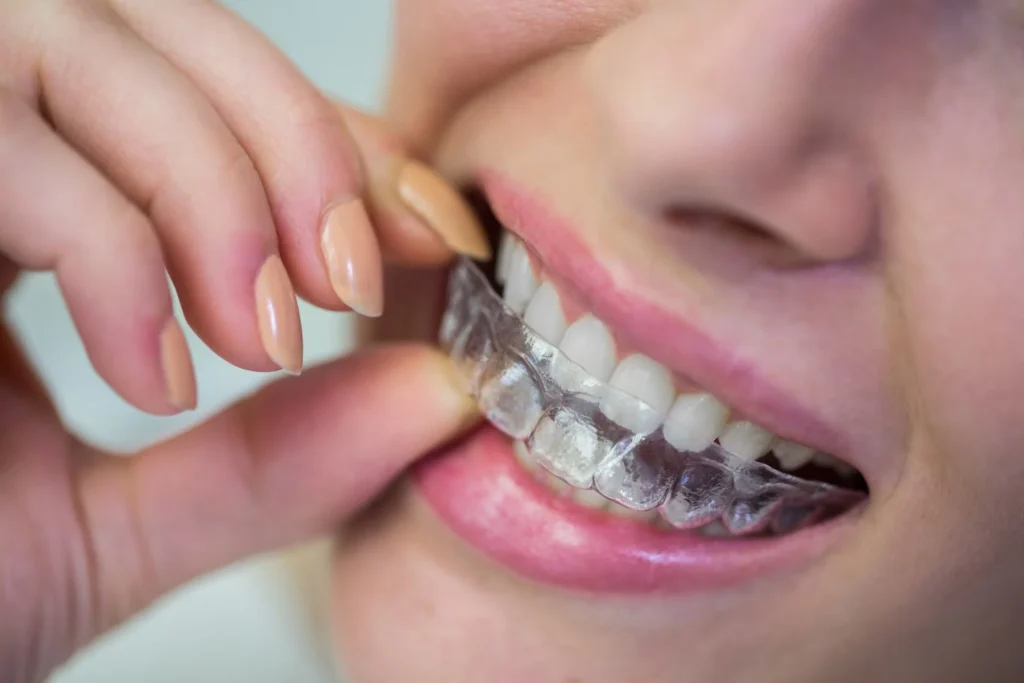
Clear aligners and traditional braces reposition teeth through planned incremental movements. Invisalign® relies on custom-made clear trays to be worn for most of the day. The trays fit closely around the teeth and are replaced in sequence as tooth movement progresses. Because they are removable, the trays come out for meals and beverages other than water, giving patients more flexibility in daily routines. This removability also simplifies brushing and flossing since there are no brackets or wires to work around.
Braces remain bonded to the teeth at all times, using brackets, wires, and occasional elastics to adjust the bite. These components stay in place all the time, which means they remain visible and can affect eating habits. Brushing and flossing around braces can require floss threaders or other tools to get the teeth clean.
Issues Aligners Can Address
Clear aligner systems offer solutions for many types of alignment problems. Invisalign® may help correct these issues:
- Crossbite: upper row of teeth rests inside the lower row of teeth.
- Overbite: upper teeth overlap the lower teeth more than normal.
- Underbite: lower teeth overlap the upper teeth more than normal.
- Crowding: teeth have insufficient room to grow correctly.
- Gaps: too much space between teeth.
Attachments may be added to certain teeth to help guide more specific movements. These small additions allow aligners to achievesome rotations, shifts, and other controlled changes within the treatment plan. Each set of trays accomplishes a small stage of the overall progress.
Treatment Timeframes
Treatment length varies, yet both braces and Invisalign® typically finish moving teeth on similar timelines, especially when you account for the time it takes to fabricate the trays. Some cases require longer treatment due to bite complexity, while others progress faster because the adjustments needed are limited. Since aligners must be worn for most of the day to work effectively, patients who follow their routine consistently often see more predictable progress.
Braces rely on scheduled adjustments to keep teeth moving. Invisalign® uses sequential tray changes, which may occur every one to three weeks depending on the plan. Because both systems follow structured stages, overall treatment time often aligns between the two, though aligners offer more control over daily wear and comfort.
Initial Appointment
The first appointment for braces involves placing brackets on the teeth and connecting the wires. This initial visit marks the immediate start of treatment, and movement begins as soon as the wire is engaged. Patients leave the appointment with the system already active.
Invisalign® begins with a digital scan of the teeth. These scans are used to produce the series of custom trays, and manufacturing may take several weeks. When the trays arrive, the orthodontist places attachments and guides the patient through the first aligner placement.
Routine Appointments and Adjustments
Braces require periodic tightening or wire changes to keep the teeth moving along the planned path. These visits may include replacing elastic ties or adjusting components to fine-tune the bite. Because the system is fixed, each appointment directly influences how the brackets and wires function.
Invisalign® appointments focus on progress checks and providing the next sets of trays. Patients often receive multiple trays to switch through at home, allowing movement to continue without needing as many in-office adjustments. This streamlined routine offers a more flexible experience, especially for those who prefer shorter, less hands-on visits.
Learn More About Invisalign®
Invisalign® provides a discreet and adaptable alternative to traditional braces while achieving the same alignment goals. The clear design, removable trays, and predictable progression create a treatment method that can fit into daily routines. Scheduling an orthodontic evaluation can help determine whether aligners or braces are the most suitable option for achieving long-term alignment results.