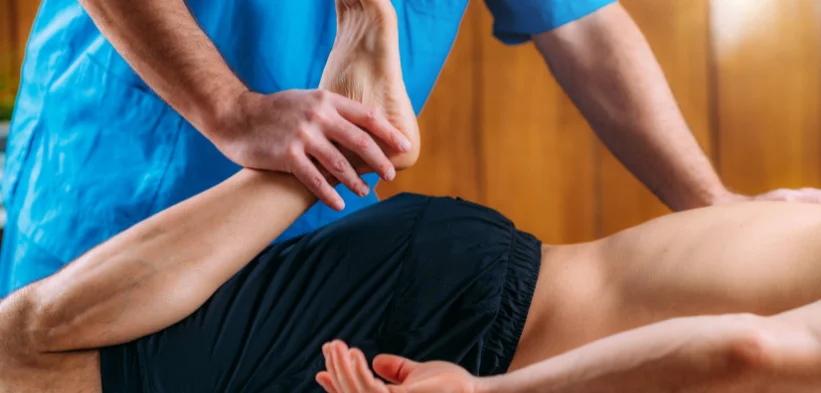
Knee pain is a common orthopedic experience among athletes and involves discomfort in or around the knee joint. It ranges from mild irritation during activity to severe, debilitating pain that prevents movement. Understanding the specific anatomy and potential injury mechanisms is necessary for effective diagnosis and treatment.
What Is Knee Pain?
The knee is a complex hinge joint formed by the femur, tibia, and patella, and it is supported by a network of ligaments and tendons. Knee pain manifests as aching, sharp, or burning sensations within these structures. Inflammation may accompany the pain, leading to swelling and a noticeable reduction in the joint’s range of motion.
Symptoms vary depending on the location of the injury within the joint capsule. Pain may be localized to the front of the knee (anterior knee pain) or affect the medial or lateral compartments. An accurate diagnosis requires a thorough physical examination, and imaging studies help confirm the extent of structural damage.
What Causes It?
Athletic knee pain typically stems from either acute trauma or chronic overuse injuries. Acute injuries occur suddenly during activity, such as an anterior cruciate ligament (ACL) tear from a rapid change in direction. Overuse injuries develop gradually over time, and they result from repetitive stress on the joint without adequate recovery. Improper biomechanics also contribute to the development of knee discomfort.
How Can You Prevent It?
Prevention strategies primarily focus on strengthening the muscles surrounding the knee joint. Strong quadriceps and hamstring muscles stabilize the patella and absorb the shock that would otherwise be transmitted to the skeletal structure. A comprehensive strength-training program mitigates the risk of injury by strengthening the joint against external forces.
Proper equipment selection is another factor in injury prevention. Specialized footwear provides the necessary arch support and cushioning, helping maintain proper alignment during high-impact activities. Athletes may also benefit from prioritizing flexibility and mobility work, as tight muscles increase tension on the tendons attaching to the knee.
What Are the Recovery Strategies?
Initial management of knee pain often involves conservative treatments such as pain medication and physical therapy. Physical therapy focuses on restoring range of motion and correcting biomechanical deficits. When conservative measures fail to provide relief, physicians may recommend interventional pain injections. These injections facilitate more intensive physical therapy, but they may not resolve the underlying structural pathology.
For patients with persistent pain, genicular radiofrequency ablation offers a minimally invasive solution. This procedure uses heat to disrupt the nerve fibers that transmit pain signals from the knee, effectively blocking the sensation of pain. It is particularly beneficial for patients who are not candidates for surgery or those seeking an alternative to total knee replacement.
Another advanced option is genicular artery embolization (GAE), which targets the hypervascularity associated with chronic inflammation. An interventional radiologist inserts a catheter to block specific blood vessels supplying the inflamed lining of the knee, reducing pain and improving function. This procedure treats the source of the inflammation, and it offers durable relief for patients with osteoarthritis or tendinopathy.
Consult an Interventional Radiologist Today
Chronic knee pain requires professional evaluation to determine if advanced interventions are appropriate. An interventional radiologist specializes in minimally invasive procedures, such as genicular artery embolization, and can assess your candidacy for these treatments. Contact a medical professional today to discuss your symptoms and develop a plan to return to peak athletic performance.