Ophthalmologists play a central role in diagnosing and treating eye problems that affect your vision and daily comfort. From routine concerns to serious issues, these specialists use advanced tools to identify the cause and guide you toward the right treatment. Their expertise helps protect your eyesight and prevent long-term complications. Here’s how ophthalmologists address common eye issues:
Exploring Common Eye Problems
Many people will face an eye problem at some point in their lives, but some conditions are more frequent than others. Refractive errors are common and often require glasses or contact lenses for correction. Other issues include cataracts, which cause the lens of the eye to become cloudy, and glaucoma, which damages the optic nerve. Dry eyes, macular degeneration, and diabetic retinopathy are also common conditions that eye doctors regularly manage.
Diagnosing Eye Issues
To identify the root cause of a patient’s symptoms, ophthalmologists use a structured diagnostic process that involves several key tests. A thorough examination allows these eye specialists to gather helpful information about the patient’s vision and overall eye health. Here are some common diagnostic methods ophthalmologists use:
- Visual Acuity Test: This test uses an eye chart to measure how clearly a person can see from a distance.
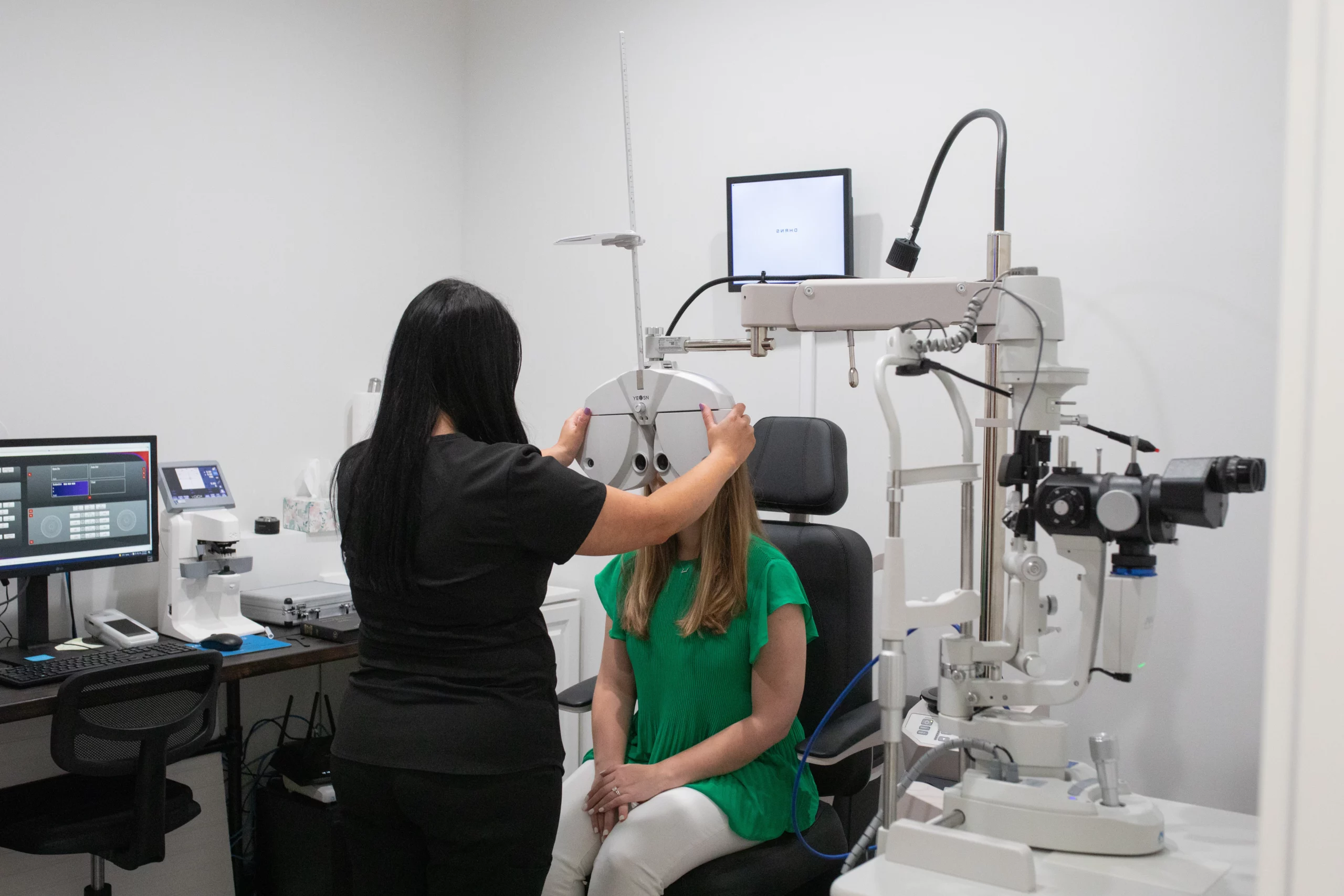
- Refraction Assessment: A phoropter is used to determine the correct prescription for glasses or contact lenses.
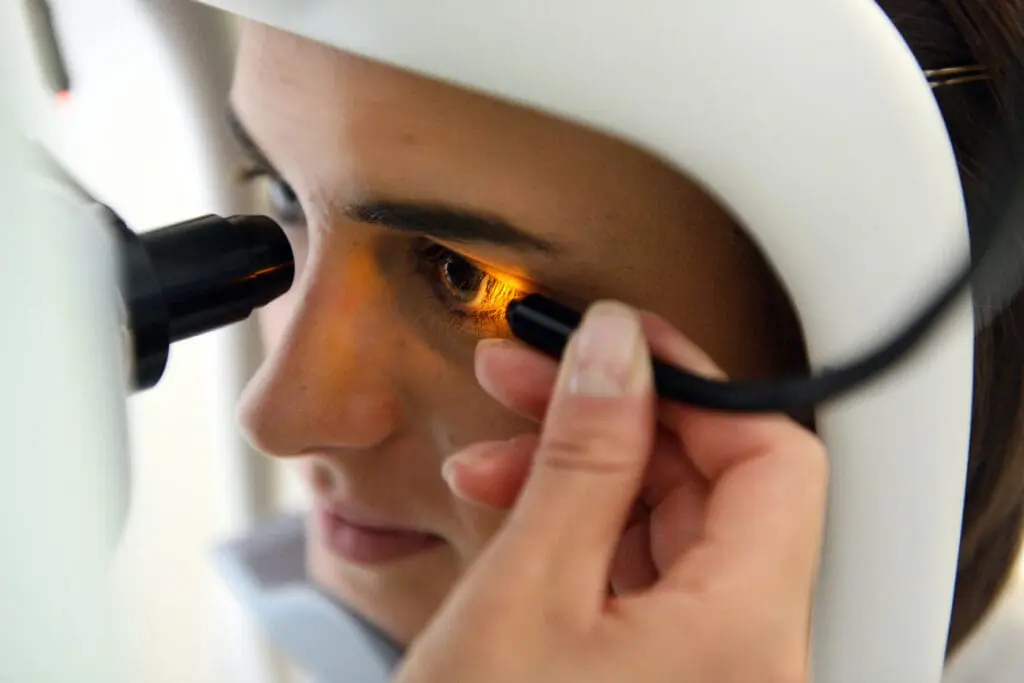
- Slit-Lamp Examination: The doctor uses a special microscope to examine the structures at the front of the eye.
- Tonometry: This test measures intraocular pressure, a key factor in diagnosing glaucoma.
- Dilated Eye Exam: Eye drops are used to widen the pupils, giving the ophthalmologist a better view of the retina and optic nerve.
These diagnostic tools are fundamental for accurately identifying various eye conditions.
Treating Eye Concerns
After diagnosing an issue, ophthalmologists recommend a treatment plan. The goal is to correct the problem, manage the symptoms, or slow the progression of the disease. The specific treatment depends on the condition, its severity, and the patient’s health. Here are some common treatments that ophthalmologists provide:
- Prescription Lenses: Glasses and contact lenses are the most common treatments for correcting refractive errors.
- Medications: Prescription eye drops are often used to treat conditions such as glaucoma, dry eyes, and infections.
- Laser Surgery: Procedures like LASIK can correct vision, and other laser treatments can help manage glaucoma or diabetic retinopathy.
- Cataract Surgery: This procedure involves removing the cloudy lens in the eye and replacing it with a clear, artificial one.
- Injections: Certain conditions, such as macular degeneration, may be treated with medication injected into the eye.
These treatments help patients maintain or restore their vision and improve their well-being.
Scheduling an Eye Visit
Regular visits to an ophthalmologist are necessary to maintain eye health and prevent vision issues. Individuals with no existing eye conditions should schedule a comprehensive eye examination every one to two years, depending on their age and risk factors. Those with a family history of eye diseases or chronic health conditions should consult their ophthalmologist more frequently.
Certain symptoms necessitate immediate attention from an ophthalmologist to prevent further complications. These include sudden vision loss, persistent eye pain, flashes of light, or floating spots in the visual field. Individuals who have difficulty distinguishing colors or seeing in low light should seek professional evaluation. Prompt intervention is key as untreated eye conditions can lead to irreversible damage or complete vision loss.
Schedule Your Check-up With Ophthalmologists
Ophthalmologists use a range of diagnostic tools and treatments to address common eye problems. Regular visits to these eye doctors are fundamental for early detection and effective management of eye conditions. For vision changes or concerns about your eye health, contact a trusted ophthalmologist near you to schedule your eye check-up today.