
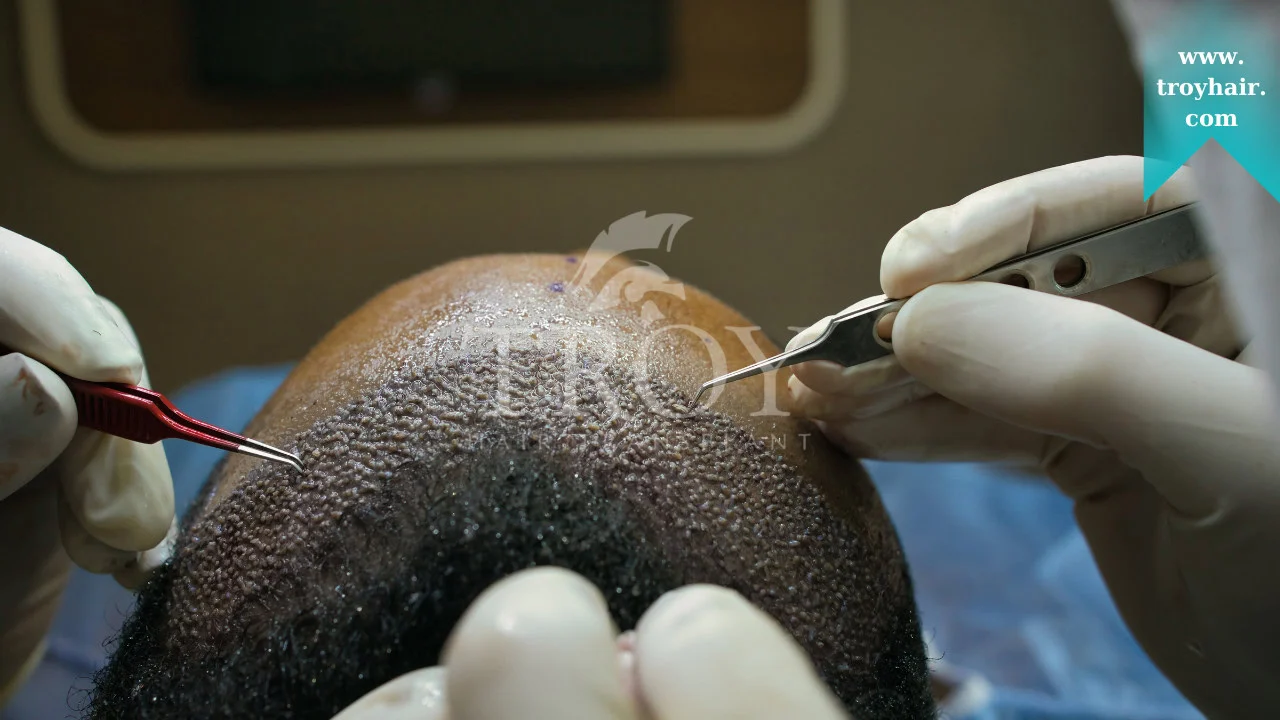
Dealing with hair loss can be personal, and understanding your options is a key first step. The field of hair restoration offers several advanced techniques developed to address hair thinning and loss. These methods focus on relocating hair follicles from one part of the scalp to another. Exploring these different approaches can help you feel more informed about the possibilities available.
Follicular Unit Extraction
Follicular Unit Extraction, FUE, is a popular hair restoration technique that carefully moves individual hair follicles. This method focuses on creating a natural-looking result by transplanting hairs one by one. Here’s a breakdown of how the FUE process works:
- Harvesting the Hair Follicles: During an FUE procedure, a skilled technician uses a special tool to gently remove individual hair groupings, known as follicular units, from a donor area. This is typically the back or sides of your head where hair is naturally fuller and more resistant to loss. These units are small, naturally occurring groups of one to four hairs. This careful removal leaves behind very small, dot-like marks that are often hard to see once healed.
- Preparing for Placement: Once harvested, these individual follicular units are carefully prepared and inspected to confirm they are healthy and ready for transplant.
- Precise Placement: Next, the technician creates tiny openings, called “recipient sites,” in the areas where your hair is thinning or balding. These sites are made to match your natural hair growth direction. Then, each prepared follicular unit is meticulously placed into these sites. This precise approach helps verify your new hair grows in a way that looks completely natural and blends seamlessly with your existing hair.
FUE can provide a very natural-looking hairline and improved density. While the procedure itself can take several hours, the recovery is generally straightforward. You’ll typically be able to get back to your daily routine within a few days, following some simple aftercare instructions to help your scalp heal.
Follicular Unit Transplant
Follicular Unit Transplant, FUT or the strip method, is another hair restoration technique. This approach involves removing a small strip of tissue from the back or sides of the scalp, where hair is typically more dense and resistant to thinning. This donor area is then closed with sutures, leaving a thin linear mark that is usually concealed by the surrounding hair.
Trained technicians work under microscopes to carefully dissect the strip into individual follicular units. These grafts are preserved and prepared for transplantation. Like with FUE, the surgeon creates small incisions in the recipient area and places the individual grafts to create a natural appearance.
The FUT method often allows for a large number of grafts to be transplanted in a single session. This makes it a practical option for individuals experiencing more extensive hair loss. The healing process for the donor area takes a couple of weeks, and the sutures are typically removed after about 10 to 14 days.
ACell® Therapy
ACell Therapy offers an innovative approach to addressing hair loss, either on its own or as a complement to hair transplant results. This treatment uses ACell MatriStem®, a natural material that boosts your body’s own healing processes. It involves preparing ACell and mixing it with Platelet-Rich Plasma (PRP), which comes from your own blood. This powerful mixture is then carefully injected into areas of your scalp where hair is thinning.
Once injected, ACell works to stimulate your natural regenerative abilities, rejuvenating weakened hair follicles for healthier, thicker growth. This is a minimally invasive option with minimal downtime, making it a convenient choice. It may be a standalone treatment if you’re not ready for surgery, or as a way to boost the outcomes of procedures like FUE or FUT. Multiple sessions may be recommended to achieve the best results for your individual needs.
Consult a Hair Restoration Specialist
Understanding the various hair restoration techniques is a positive step toward addressing your hair loss concerns. Each method has its own process and is suited for different needs and hair loss patterns. A qualified hair restoration specialist can provide you with personalized information and a thorough evaluation of your specific situation. They will help you understand which approach aligns best with your goals. Schedule a consultation to discuss your options and create a clear, supportive plan.