
Contact lenses offer an alternative to traditional eyeglasses for correcting vision. These small, curved discs sit directly on the tear film that covers the surface of your eye, and they move with your eye to provide a wider field of vision than glasses. Understanding the different types available can help you decide whether contacts are right for your vision needs. Here is more information on contacts and what the process involves:
What Are Contact Lenses?
Contact lenses are thin, curved discs made from various materials that correct refractive errors by sitting directly on the surface of the eye. They work by redirecting light properly onto the retina, and they can correct nearsightedness, farsightedness, astigmatism, and presbyopia. Unlike glasses, contact lenses move with your eyes, providing peripheral vision correction.
What Are the Different Types?
Several types of contacts are available to meet different vision correction needs and lifestyle preferences. Daily disposable lenses are designed for single-use and are discarded at the end of each day, while weekly and monthly lenses can be cleaned and reused for their designated wear period. Extended-wear lenses are approved for overnight use, though this requires careful monitoring by a professional.
Soft contact lenses are made from hydrogel or silicone hydrogel materials and conform to the shape of your eye. Rigid gas permeable (RGP) lenses are made from durable plastic materials that allow oxygen to pass through, providing crisp vision correction for complex prescriptions. Specialty lenses include toric lenses for correcting astigmatism and multifocal lenses for addressing presbyopia.
How Do They Work?
Contact lenses correct vision by changing how light enters your eye and focusing it correctly on the retina. When you have a refractive error, light doesn’t focus correctly on the retina, which causes blurred vision. The contact lens serves as an additional refractive surface, compensating for the eye’s focusing problems.
The lens stays in position on your eye through surface tension with the tear film. Blinking helps distribute tears across the lens surface and maintains proper positioning, while the natural movement of your eyelids keeps the lens centered. Modern contact lens materials are designed to maintain hydration and allow oxygen permeability for eye health.
What Does the Process Involve?
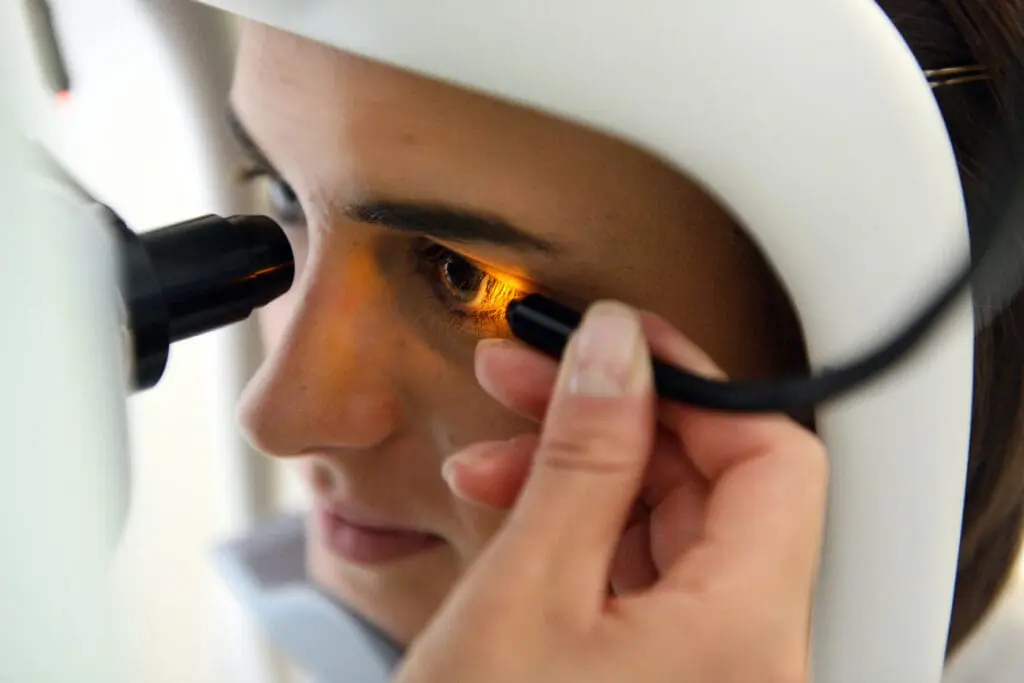
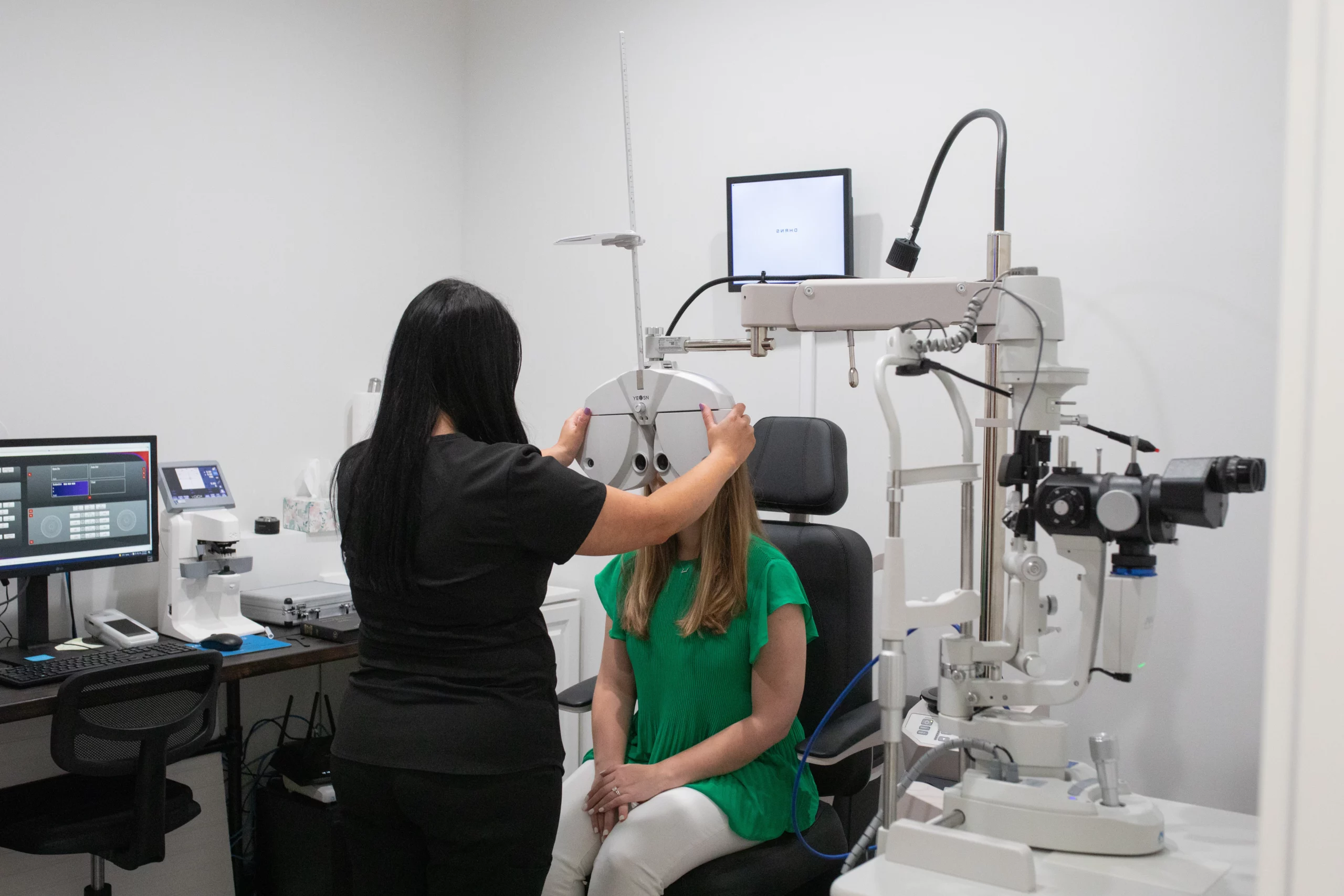
Getting contacts begins with a comprehensive eye examination and contact lens fitting with an eye care professional. The fitting process involves measuring your eye’s curvature, pupil size, and tear film quality to determine the lens parameters that suit your eyes. Your eye care provider may also assess your lifestyle and vision needs to recommend the most suitable lens types.
The initial fitting appointment involves trying different lens types and brands to find the most comfortable option. Your eye care professional will instruct you on proper insertion, removal, and care techniques, and they will provide a wearing schedule to gradually increase your daily wear time. Follow-up appointments monitor your eye health and lens performance.
How Is Professional Guidance Beneficial?
Professional guidance from a specialist offers recommendations tailored to your unique eye characteristics and specific vision needs. An eye care professional can identify any underlying eye conditions that may affect contact lens wear and recommend the most suitable lens materials and designs for your lifestyle. Regular check-ups help monitor your eye health and catch potential issues early.
Choose Your Lenses Today
Contact lenses provide convenience for vision correction when correctly fitted and cared for under the guidance of a professional. The variety of contacts offers options tailored to your specific vision needs and lifestyle preferences. Schedule a contact lens consultation with a professional to explore your options. They can assess your candidacy and guide you through the process.