Choosing between porcelain veneers and composite resin often comes down to the look, strength, and type of care a patient needs from a cosmetic treatment. Porcelain veneers offer a durable ceramic surface with a natural shine, while composite resin provides a flexible option that, in some cases, can be shaped directly on the tooth. Here is more information about the differences between porcelain and composite veneers.
Porcelain Veneers
Porcelain veneers are thin ceramic shells that cover the front surfaces of teeth to improve color and shape. These shells are made from strong porcelain that holds up well during daily chewing, and the material reflects light in a way that closely matches natural enamel. Unlike crowns, porcelain veneers add only a cosmetic layer.
Porcelain also offers long-lasting durability because it resists daily staining. The veneer remains stable once it bonds to enamel, which supports a consistent appearance over time. Many patients choose porcelain for a smooth, polished look that blends with neighboring teeth. Because the ceramic layer is thin yet strong, it provides cosmetic enhancement without significantly affecting speech.
Composite Resin Veneers
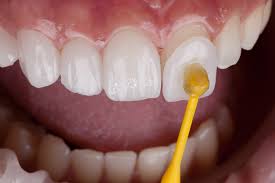
Composite resin veneers may be applied directly or indirectly. In the direct method, the dentist layers and shapes a tooth-colored resin directly on the enamel surface. For the indirect method, the dentist instead creates custom resin veneers and bonds them to the teeth with an adhesive. In both cases, after the resin cures, the dentist can polish the surface to a shine to match the surrounding teeth. Composite veneers offer cosmetic improvements for concerns such as discoloration, worn edges, or minor contour irregularities.
Composite resin is not as hard as porcelain, but it is a reliable material for quality veneers. The surface can be polished to a smooth, natural-looking shine, and small chips can be repaired without replacing the entire veneer. Because the material is more porous than ceramic, it may need occasional refinishing to maintain brightness.
Procedure Differences
Porcelain veneers typically require two appointments because the veneers are fabricated in a dental lab. At the first visit, the dentist removes a small amount of enamel. Then, they take digital scans or impressions and select a shade that matches the existing teeth. Temporary veneers protect the prepared teeth during the creation of the final ceramic versions. At the second visit, the provider bonds the veneers in place and makes minor adjustments for fit.
Composite resin veneers applied with the direct method are completed in a single visit because the dentist applies and shapes the material directly on the teeth. The indirect method may require multiple appointments. The appointment begins with light enamel preparation, followed by layering the resin to build the final form. Once shaped, the resin is polished to create a smooth surface that blends with adjacent teeth.
Explore Your Veneer Options
Porcelain veneers and composite resin veneers both enhance the appearance of teeth but may differ in appearance and treatment steps. Porcelain provides a durable ceramic surface with a natural shine, while composite resin is also durable and may be applied in fewer appointments. For more information about veneers and which type may be right for you, consult your dental provider.