
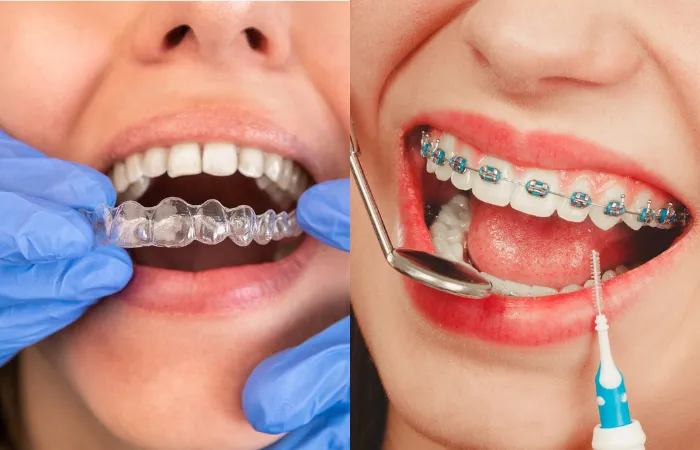
Traditional braces and insalign aligners are two methods orthodontists use to straighten patients’ teeth. Invisalign uses clear, removable aligners, while traditional braces rely on fixed brackets and wires to guide tooth movement. While both approaches gradually shift the teeth over time, each method is different in how they work and how they affect your daily habits and lifestyle. Here is an overview of both systems helps set clear expectations before beginning orthodontic care:
How Invisalign Works
Invisalign uses sets of custom-made, clear plastic aligners that fit closely over the teeth. Each set in the series reflects a small step in the planned movement. People usually switch to a new set after a short period, which keeps the process moving forward. The aligners stay in place for most of the day, but they can come out for eating and brushing.
Invisalign’s removable design helps people maintain their brushing and flossing routines without making major changes. The smooth plastic also eliminates brackets and wires, which means there are no metal parts that touch the lips or cheeks. You must be consistent in using Invisalign because the aligners only work when they are worn as directed.
How Traditional Braces Work
Traditional braces use a system of brackets and wires that stay fixed to the teeth. Each bracket holds the wire in place, and small adjustments to the wire guide the teeth through each phase of alignment. Braces stay in position all day and night, so they keep working without any effort from the patient. It can take 1-3 years for braces to complete the straightening process.
Fixed appliances do not need to be removed during meals or brushing, which helps some people stay on track. Braces come in metal or ceramic versions, and the design has been refined for many years. Some people prefer braces if they want a treatment style that stays in place throughout the entire process.
How They Affect Daily Life
Clear aligners and braces require different daily routines. Invisalign aligners come out for meals and for cleaning the teeth, which helps avoid food getting caught on hardware. The removability also gives people flexibility during social events or photographs, though the aligners do need to stay in place for the majority of the day.
Braces follow a more fixed schedule because they remain attached to the teeth at all times, and people must adjust their eating choices and hygeine habits to reduce the risk of damaging brackets or bending wires. Brushing and flossing with braces requires different techniques, but there are many tools exist that can help you clean around the hardware.
How They Differ in Appearance
Appearance is one of the most noticeable differences between Invisalign and braces. Invisalign aligners use clear plastic that visually blends with the teeth, which appeals to people who want a less visible option. Some people choose this style when they have work, school, or social environments where a subtle look feels more comfortable.
Braces sit on the surface of the teeth, so they show more clearly, especially if they are made of metal. Ceramic braces offer a lower-profile look, though they still use brackets. People often choose braces if they want hardware that stays in place or if they prefer not to manage removable appliances throughout the day. Both systems support steady progress, and the choice often comes down to personal preferences and comfort.
Learn More About Straightening Options
Traditional braces and Invisalign both offer different features related to appearance, daily routines, and personal habits. Reviewing the features of clear aligners and fixed braces can help you determine which approach aligns with your goals. Your orthodontist can explain how each system can work for your specific needs.